REMEMBERING SAINT CASIMIR ROMAN CATHOLIC CHURCH:
REFLECTIONS OF NORB GICZEWSKI, SR.
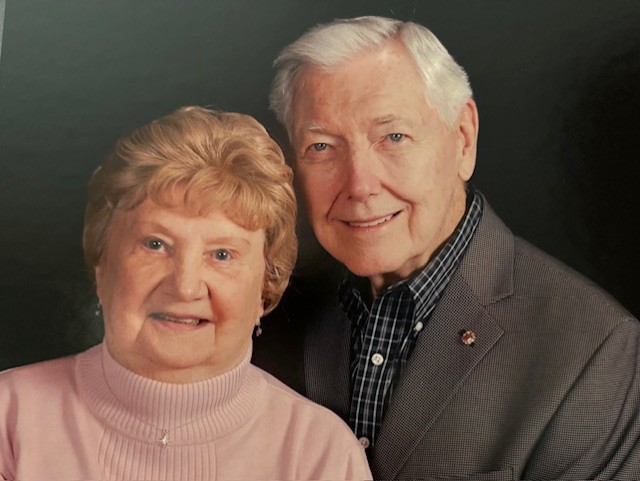
Norbert (“Norb”) Giczewski Sr. was born on March 15, 1935. As of November 2025, he was 90 years old and had two sons and a daughter.
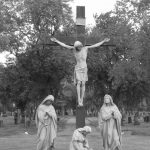
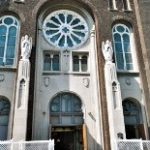
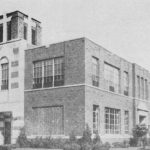
As a child, he lived at 3067 23rd Street, south of St. Casimir Roman Catholic Church and School. It was during a time when people lived close to their churches, and in an interview Norb shared his vivid memories of walking to school and church as a young boy.
Norb was the only child born to Joseph (August 14, 1912 – September 4, 1948) and Stella (née Wojtanowski) Giczewski (October 5, 1914 – July 31, 2000). Joseph was born in Hazelton, Pennsylvania. Stella was born in Detroit.
Joseph’s parents were Joseph (April 6, 1884 – April 5, 1954) and Adela (Adeline or “Adoline”) (née Margavich) Giczewski (May 5, 1887 – May 8, 1972). Joseph was born in Wilkes-Barre, Pennsylvania. He worked for Crucible, a car parts supplier in Detroit. Adoline was born in Poland.
Joseph and Adoline are buried in Holy Cross Cemetery in Southwest Detroit.
Stella’s parents were Louis Wojtanowski (b. ca. 1887) and Anna Tatarczuch. According to the 1930 Michigan Census, Louis was born in Galicia in the southeastern region of Poland, in an area that was known as Austria at the time. Louis, who may have been known as Ludwik, immigrated to the U.S. in 1930. He worked for Gemmer Manufacturing, located on Mt. Elliott Street on Detroit’s east side, where he built car parts. He took streetcars and buses to get to work.
Anna was also born in the Austrian region of Poland. She divorced Louis and remarried a man named John Good. They had one child together, Hedwig Wojtanowski Good (April 16, 1919 – April 24, 1997). Not much else is known about Anna Tatarczuch or John Good. There is an Anna Tatarczuch buried in Wieliczka in southern Poland. Although the name spelling is identical, without further in-depth research, it would be impossible to know for sure whether it is the same person. There are many variations of the name Tatarczuch on family search sites, making it even more difficult to find information about Anna Tatarczuch.
Norb’s father Joseph worked for Bohn Aluminum and Brass Corporation on 22nd Street in Detroit, north of Michigan Avenue. The 1940 Wayne County Census lists him as a buffer inspector. Early on, Stella worked for the Ternstedt Manufacturing Company, which eventually became acquired by the General Motors Corporation. The 1940 Wayne County Census lists Stella as an “inspectress” in the automobile industry.
Joseph and Stella were married at St. Casimir Catholic Church in approximately 1934.
Norb described his home while growing up as “most definitely a Polish home.” His maternal grandfather Louis spoke Polish and was not proficient in the English language. The family tried to make sure that Louis learned English along with the family.
Norb began attending grade school at St. Casimir in 1941, where he was taught by Felician nuns, many of whom were influential in his life. He studied Polish in First and Second Grades because his grandfather Louis spoke mostly Polish. At St. Casimir, he became very close to Fr. Nieckarz, who was the most influential person in Norb’s life and who also was instrumental in keeping Norb in school. He became somewhat of an advisor to Norb.
Norb remembers that, while in school, the street was closed off from 11:30 a.m. until 1:00 p.m. daily, creating a wonderful, makeshift volleyball court on which the students played. “It was like a recreational field,” Norb remembered. It was all concrete, and the students learned how to play volleyball quite well.
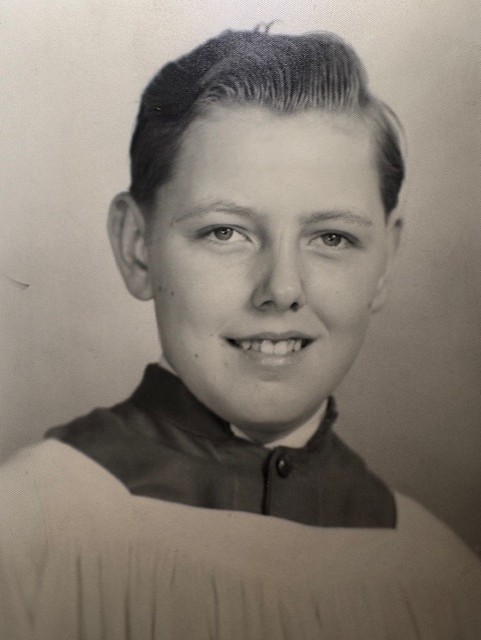
During an interview, Norb recalled, “I enjoyed my early years in school. I quickly got involved as an altar boy. I learned that I could go to the funerals and miss Mass.” Living so close to the church made it convenient for him.
Norb was only 13 years old when tragedy struck his family and his father died. At first, Norb didn’t have a way to make much money, and times were very difficult for him and his mother. But he figured out a way to earn money or pocket change to go to the movies—one of his favorite pastimes.
“I did baptisms on Sunday. Fr. Maisel took a liking to me because I would show up early and set up and do all the things he liked. So, I got two quarters that would take me to the movies and buy me refreshments.
“Fr. Maisel was a long-time pastor who ruled St. Casimir like he was the mayor of the city. He gave the homily in Polish at the 10 a.m. Mass.
“The nuns would challenge me and ask me what the Gospel reading was that day.”
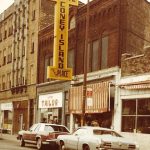
Norb loved going to the local movie theaters. He went to a theater called the Wolverine—which later became known as the Dale—located on 23rd Street, not far from St. Casimir near a corner drug store.
He also loved going down to the Detroit River and remembered that he and his friends could get to the river very easily, as it was just a few blocks south of their neighborhood. When he got a bike, he rode with his friends to the Detroit River.
But life for young Norb wasn’t all fun. Stella had a modest income, but not enough to provide for herself and Norb. Norb took care of her by going to work immediately after his father died. He worked at A&P, where he stocked shelves and bagged groceries. In addition, he worked at various theaters. Understandably, this was a job that he loved. He eventually worked his way up to usher at the Fisher Theater in the landmark Fisher Building on West Grand Boulevard, a position he secured when he was only 16 years old.
Norb recalled, “It was the greatest thing because I knew so many of the kids from St. Casimir. I would see them in the balconies and on the mezzanine. The Fisher got quite busy.
“I worked my way to the United and the Fox. I went in for special events, such as performances by Frank Sinatra, Martin & Lewis, and the like.
“I was making extra money by doing this. I worked at the Palms-State, also. The building is still there.”
The Palms-State Theatre was originally known as the Central and then the Grand Circus Theatre from 1913 – 1923. The original building was razed and a new one constructed on the site in 1925, which was called the Francis-Palms Building. The architect was C. Howard Crane. The building was named for Francis Frederick Palms (1809 – November 4, 1886), a First French Empire native and wealthy landholder who made his fortune in business investments in Detroit and the surrounding area.
Palms moved to Detroit in 1833 and married Martha Burnett, who died a short time after the birth of their son, Francis Frederick II. Francis then married Catherine Campau, the daughter of Joseph, one of early Detroit’s preeminent landowners. Francis made a lot of money as a grocer and invested profusely in land, which garnered massive returns on his investments.
After Francis Palms died, his descendants continued his legacy of real estate development.
When the theater in the Francis-Palms Building opened in 1925, it was called the State Theatre. In 1937, it was renamed the Palms-State Theatre, and in 1946, the Palms Theater. In 1982, its name reverted back to the State Theatre. In 2007, it was renamed yet again—this time to the Fillmore Detroit.
The historic, 12-story Fillmore Detroit building features a terra cotta exterior and intricate Beaux-Arts Italian Renaissance décor on its interior office tower, save for the ground floor, which underwent renovations and an upgrade in approximately 1960. Its eight-story auditorium covers the entire span of the building. Original theatre seating can be found on its mezzanine and balcony levels.
The young Norb was immersed in this atmosphere. And although he tremendously enjoyed the lush environment and glamor of the theater, his purpose was to support himself and his mother.
In 1950, at the age of 15, Norb bought his first car. “All the stores that I packed groceries at helped pay for it,” he recalled. “I even did soda jerking at the local drug store on Livernois. The idea was to make as much money as I could because one of my good friends there said, ‘If you’re in the market for a car, I’ll sell you mine, but you have to give me $100.’ I said, ‘What if I get you $70 because that’s all I have?’ He said, ‘Do you have a deposit?’ I said, ‘No.’ He said, ‘Okay.’”
The car was a 1941 Ford coupe. Norb laughed as he recalled, “When I bought it from Scotty, the body was green, but he painted the fenders silver with a brush. I had it for a good number of years.
“I was 15 years old. No driver’s license. I watched my dad shift the Packard. One day, coming home from the grocery store, I didn’t make a complete stop and I was pulled over. I told the officer, ‘I take my grandfather to the store and my mother to the store.’ He said, ‘Well, what are you going to do now?’ I was lost for words. He said, ‘Show me what you can do.’
“He said, ‘Take me over to Junction and show me how to angle park. So, I drove him and I parked on an angle, and he said, ‘When are you going to show up for that license?’ I said, ‘On Monday morning at McGraw Station.’
“I got there, and he said, ‘This kid can drive.’ I was blessed. I was 15 years old, and I had my driver’s license.
“As soon as I possibly could, after I got done with the grocery stores, once they gave me that driver’s license, I drove a station wagon for Wayne Cleaners. We had some high-end customers. It was three years until I would be 18 years old.”
Norb had dropped out of high school to work for Wayne Cleaners. The company was located in an area north of Detroit, not far from Lathrup Village.
Norb recalled, “Hugh Dean had a beautiful home out there. I did dry cleaning for them. I got to talk to people and socialize with them and satisfy their dry cleaning needs.
“I met Al Kaline. I met Harry Heilmann, former baseball player and then-Detroit Tigers’ announcer.
“At that time, I had the feeling that the dry cleaning business wasn’t going to last long. So, I went to Cadillac. But dry cleaning was enjoyable.
“I decided to go to Cadillac and start as an hourly employee building tanks for the Korean War effort.”
It was around that time that Norb left St. Casimir Church and started attending St. Hedwig because his mother and her father were parishioners there.
But then, in 1955, Norb was drafted because he had quit school.
He recalled, “I didn’t want to be just a soldier and dig fox holes and shoot people. I went to my superior and said that I wanted to continue my education.
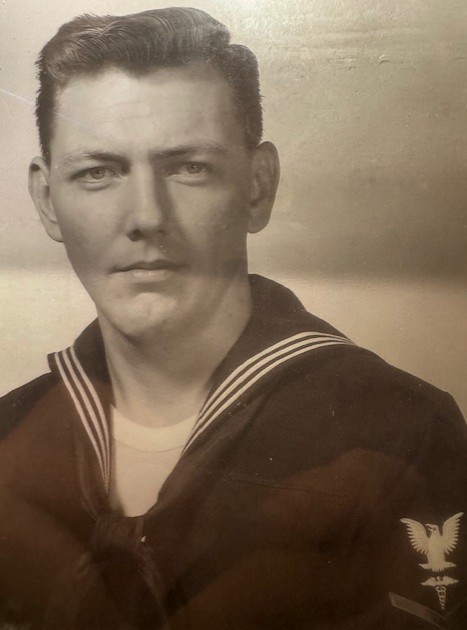
“I got a pretty fair GCT, which is the numbering system that was used. I went through all the testing that proceeded pretty positively. I entered the Navy and studied medicine, pharmacology and human anatomy. I became Corpsman attached to the 2nd Marine Division. There I found my friend, who encouraged me to look into neuropsychology. I came out with a degree in neurology and psychology.”
When Norb left the Navy, he was supposed to go to work for Eloise Hospital, a psychiatric hospital in Wayne County, Michigan. But he went back to Cadillac, where he was asked what he wanted to do. He said that he wanted to continue to improve himself. Cadillac placed him in a clerk’s position, and eventually he became a master clerk.
“I worked for the Marine Division,” Norb related. “I worked up to general supervisor. I was taken from the manufacturing division and went to human resources for the balance of my career, and I did consulting with the real goal of quality. I was interested in changes from team decisions to getting input from the people who work for you.”
When it was time for Norb to get a new car, his next car was a gray 1950 Buick. He got a good price for it, and it was in excellent condition. It lasted until his marriage in 1956.
Norb reflected, “When I was in the service, my wife had slid on ice into the front of a building with the car. She was crying on the phone. The car was damaged to some degree.”
His wife, Sylvia, turned to her brother, who was able to set Norb up with a 1956 Ford four-door sedan with a super-powerful engine.
Norb met Sylvia (née Boguslaski) (November 8, 1931 – October 29, 2021) through his good friend Frank Starski. They were introduced at a drive-in movie in Dearborn. Norb knew right away that Sylvia would become his wife. They spoke Polish to each other and had a tremendous amount in common. They loved to take long walks together by the river.
Norb and Sylvia were married on November 10, 1956, at St. Francis d’Assisi Catholic Church on Detroit’s west side, Sylvia’s home parish. After they married, the church became the couple’s parish for a while.
The couple had a very big Polish wedding. Their grandparents, cousins, and entire extended families were in attendance. Sylvia’s family was much larger than Norb’s. He recalled that she would take him to showers where he didn’t know anyone. Likewise, he took her to big important events at Cadillac, such as when the division won the Baldrige Award.
Their wedding reception was at the Knights of Columbus – Holy Cross Council No. 2739 on Larkins Street on Detroit’s west side, which Norb joined when he was at Cadillac. The caterer served an abundance of food. They had a full band, which was recommended by their church. Their bridal party consisted of three couples.
Norb was in uniform in 1956. For their honeymoon, they made a return trip to Niagara Falls, which they had visited previously and which held a special place in their hearts.
When he came back from the Navy, Norb played on a volleyball team in Allen Park, hearkening back to his St. Casimir days. He played basketball, too. But the 1950s were particularly memorable for Norb.
“The best times for me in the world happened in the ‘50s. That was the best time in my life. A lot of doors opened up for me,” he reminisced.
Also notable were his early years at St. Casimir Catholic Church.
“Having been alone and doing my jobs, I enjoyed working with other people,” he recalled. “I formed a pretty good group of friends. Then I got involved as an altar boy from the time I was a young boy. I can still say the prayers in Latin. It put me into a social environment that I didn’t have a chance at before because I was helping my mother and me to survive.”
Reflecting on Polish holidays and traditions, Norb said, “My mother led the way all the time. She sent letters to Poland and had me read them for her because she was losing her sight. She stayed in her home as long as she possibly could. She recognized every Saint’s Day. She always sang Sto Lat! to people. She did her fasting for Lent.
“Our First Holy Communion was a special event, of course. Our children were treated exactly the same way.
“The only regret is that our children didn’t learn more Polish.
“I don’t care if we went on vacation, we went to church on Sunday. That’s how important that was to me. My grandchildren know that about me.”
Sylvia and Norb would have been married 69 years on November 10, 2025. On November 9, he had a Mass said for her. Afterwards, he gathered his children around him for breakfast. He told them that he would like each one of them to tell him one thing that was most meaningful about their mother.
For a moment, there was silence. Then, Norb began. He said that his most vivid memory of Sylvia was kneeling beside her at the altar on the day they were married and looking at each other as they knelt beside one another on the kneeler. “We didn’t say a word.”
“We try to remember those important things,” said Norb.
Sources:
- Giczewski Sr., Norb. Informal telephone interviews with the author. (West Bloomfield, MI: November 17 and November 25, 2025)
- https://www.dignitymemorial.com/obituaries/livonia-mi/sylvia-giczewski-10426817
- https://en.wikipedia.org/wiki/Francis_Palms
- https://www.detroitphotography.com/architecture/building/palms-building-and-state-theatre
- https://www.familysearch.org
- https://www.findagrave.com/memorial/266446015/anna-tatarczuch
- https://www.findagrave.com/memorial/138379931/adela-giczewski
- https://www.findagrave.com/memorial/138379878/joseph-giczewski
Photos:
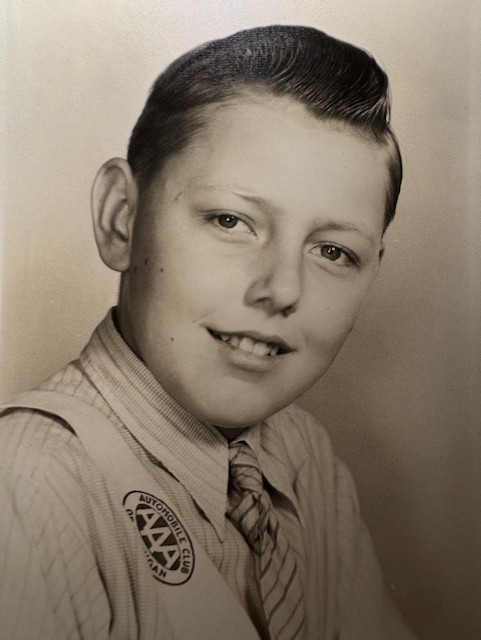
- Norb Giczewski Sr. as a AAA Safety Patrol boy, ca. 1945.
- Norb Giczewski Sr. as an altar boy at St. Casimir Roman Catholic Church, Detroit, ca. 1947.
- U.S. Navy Corpsman Norb Giczewski Sr., ca. 1955.
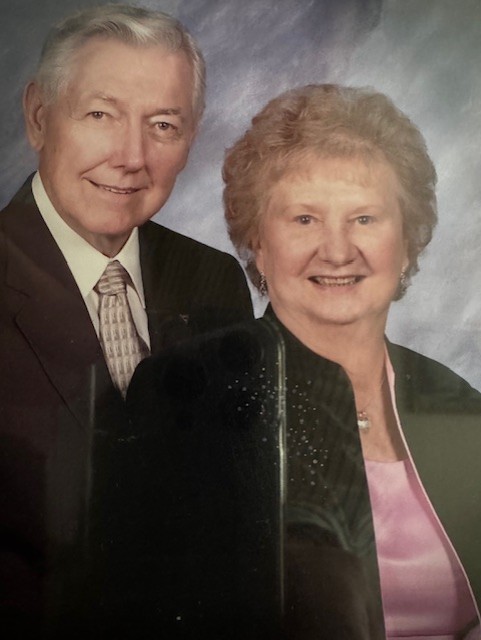
- Norb Giczewski Sr. and Sylvia Giczewski, ca. 1995.
- Sylvia Giczewski and Norb Giczewski Sr., ca. 2015.
- All photos from the collection of Norb Giczewski Jr. Reprinted with permission.